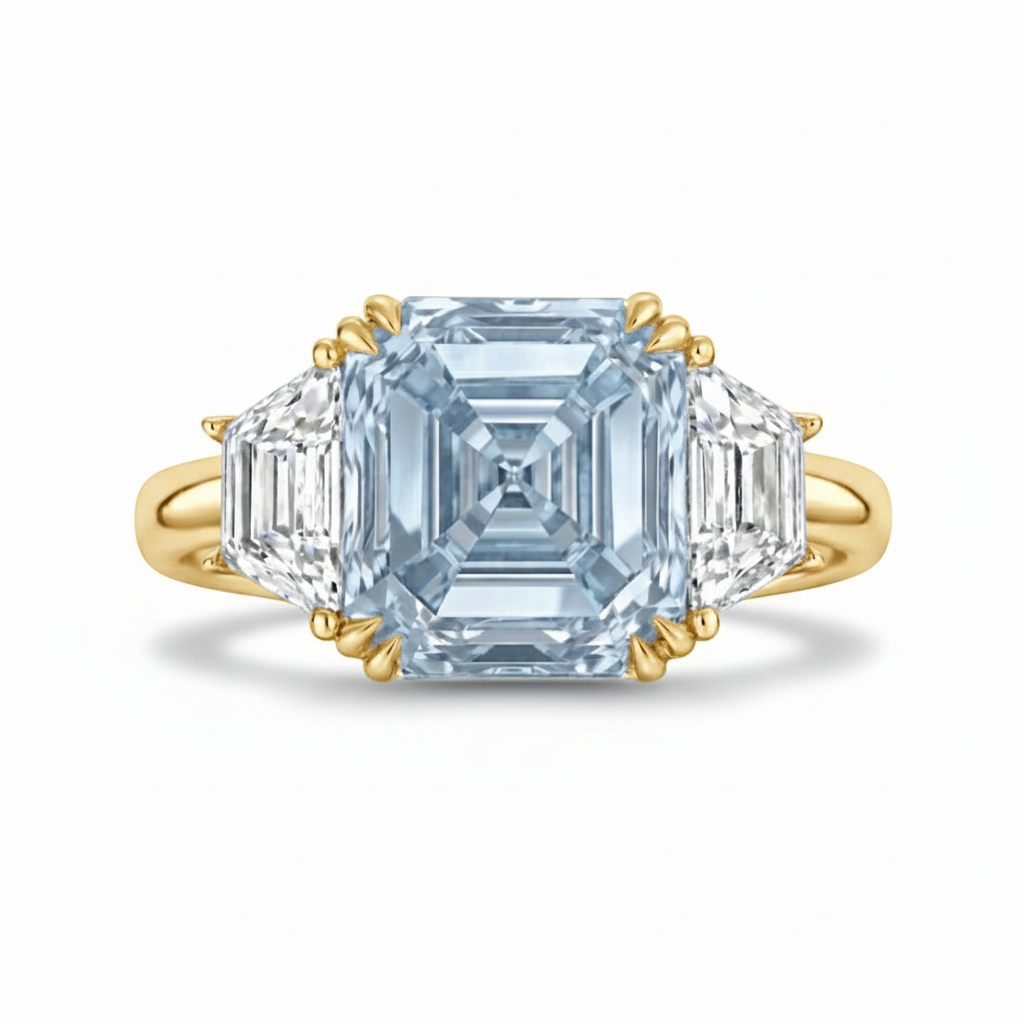
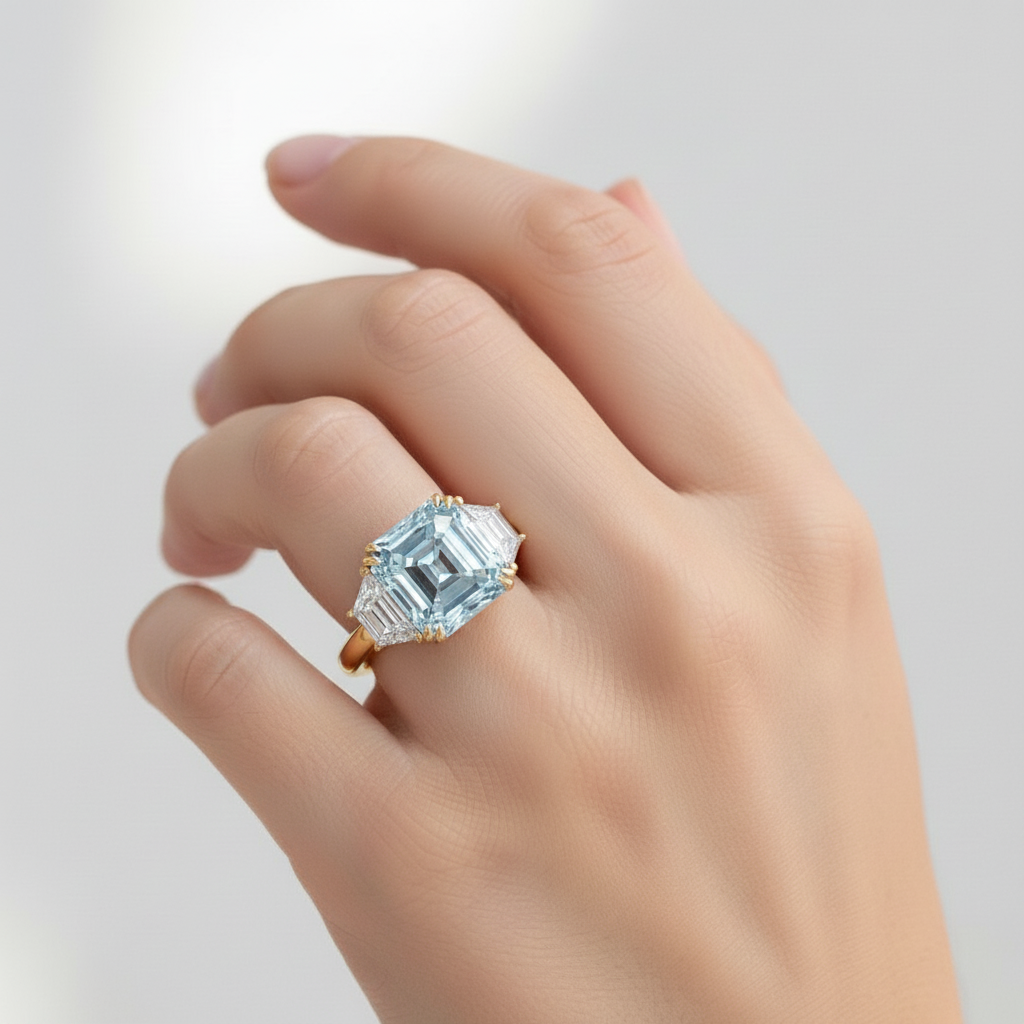
Fancy Blue Diamond Engagement Rings
Fancy blue diamonds bring a rare, oceanic hue to engagement rings for those seeking something truly one of a kind. Available in solid gold, with lab-grown, natural, or moissanite stones.
Where blue color comes from
Blue in a diamond comes from boron atoms in the crystal structure, which absorb red light and leave blue behind. Boron also makes the stone electrically conductive, which is unusual, since most diamonds are insulators, and it is one of the properties a gemological laboratory can test for directly.
Choosing a setting metal
Blue reads coolest and strongest in white gold or platinum. Yellow gold shifts the perceived hue toward green by contrast, which can be used deliberately but is worth seeing before you decide. White diamond accents around a blue center sharpen the color by giving the eye a neutral reference beside it.
Lab-grown, natural or moissanite
Natural blue is among the rarest colors in diamond, which is why the great majority of blue stones on the market are lab-grown or moissanite. Lab-grown blue is chemically and optically identical to mined blue and costs a fraction as much. Natural stones are graded by GIA, lab-grown by IGI, and moissanite carries a GRA certificate. Every stone ships with its certificate.
Made to order in solid gold
Each ring is handcrafted to order in our Bangkok workshop in solid 9K, 12K, 14K, 16K or 18K gold, never plated, in white, yellow or rose. 18K has a richer color; 14K is harder and stands up better to daily wear. Shipping is free worldwide with duties included, and returns are open for 30 days.
Helpful guides: Blue diamond engagement ring guide & real prices · Colored diamond prices: natural vs lab-grown vs moissanite · Fancy color diamonds guide · 9K vs 14K vs 18K gold guide
Fancy blue diamond engagement ring FAQs
Why are natural blue diamonds so rare?
Blue requires boron to be present in the crystal as it forms, which happens very seldom. Natural blue is one of the scarcest colors in diamond, and most blue engagement rings therefore use lab-grown stones or moissanite.
Are lab-grown blue diamonds real diamonds?
Yes. A lab-grown fancy blue has the same chemical composition, hardness and optical properties as a mined one. The difference is origin, not material.
What metal suits a blue diamond best?
White gold or platinum keeps the blue cool and reads strongest. Yellow gold pushes the perceived color toward green, which some people choose deliberately.
Is a blue diamond the same as a sapphire?
No. A blue diamond is a diamond colored by boron; a sapphire is a different mineral, corundum. Diamond is harder and returns light differently, so the two look distinct side by side.
Do your blue diamonds come certified?
Yes. Natural diamonds are certified by GIA, lab-grown diamonds by IGI, and moissanite by GRA. Every gold piece is also stamped and certified for purity and weight.
Can I design a blue diamond ring from scratch?
Yes. We source the center stone and build the setting around it. Share a reference image or a description and we will work from there.